Vickywood TEAK 1.0 135 vs Vickywood TEAK 2.0 180
Both of these are Vickywood tents, so the question is not which brand to trust but which size and configuration suits your vehicle and how you camp. The TEAK 1.0 135 and the TEAK 2.0 180 share Vickywood's construction and warranty; where they part company is in the numbers below.
By the numbers, the Vickywood TEAK 1.0 135 brings 63 kg, 2.4 m² of floor, 120 cm of headroom and sleeps 2. The Vickywood TEAK 2.0 180 counters with 81 kg, 3.3 m² of floor, 120 cm of headroom and sleeps 3.
The TEAK 1.0 135 is 18 kg lighter at 63 kg against 81 kg, which on a factory roof rated for 68 to 75 kg is often the difference between a legal fit and a rack upgrade. Inside, the TEAK 2.0 180 gives 3.3 m² of sleeping floor against 2.4 m², about 38 percent more, and it sleeps 3 to the TEAK 1.0 135's 2. The TEAK 1.0 135 lists about 11% lower than the TEAK 2.0 180.
The TEAK 1.0 135 uses aluminum; the TEAK 2.0 180 uses aluminium honeycomb with rubberized surface. Closed, the TEAK 1.0 135 sits 5 cm lower on the roof — 24.5 cm against 29.5 cm — which is drag you carry on every mile you are not camping.
Vickywood
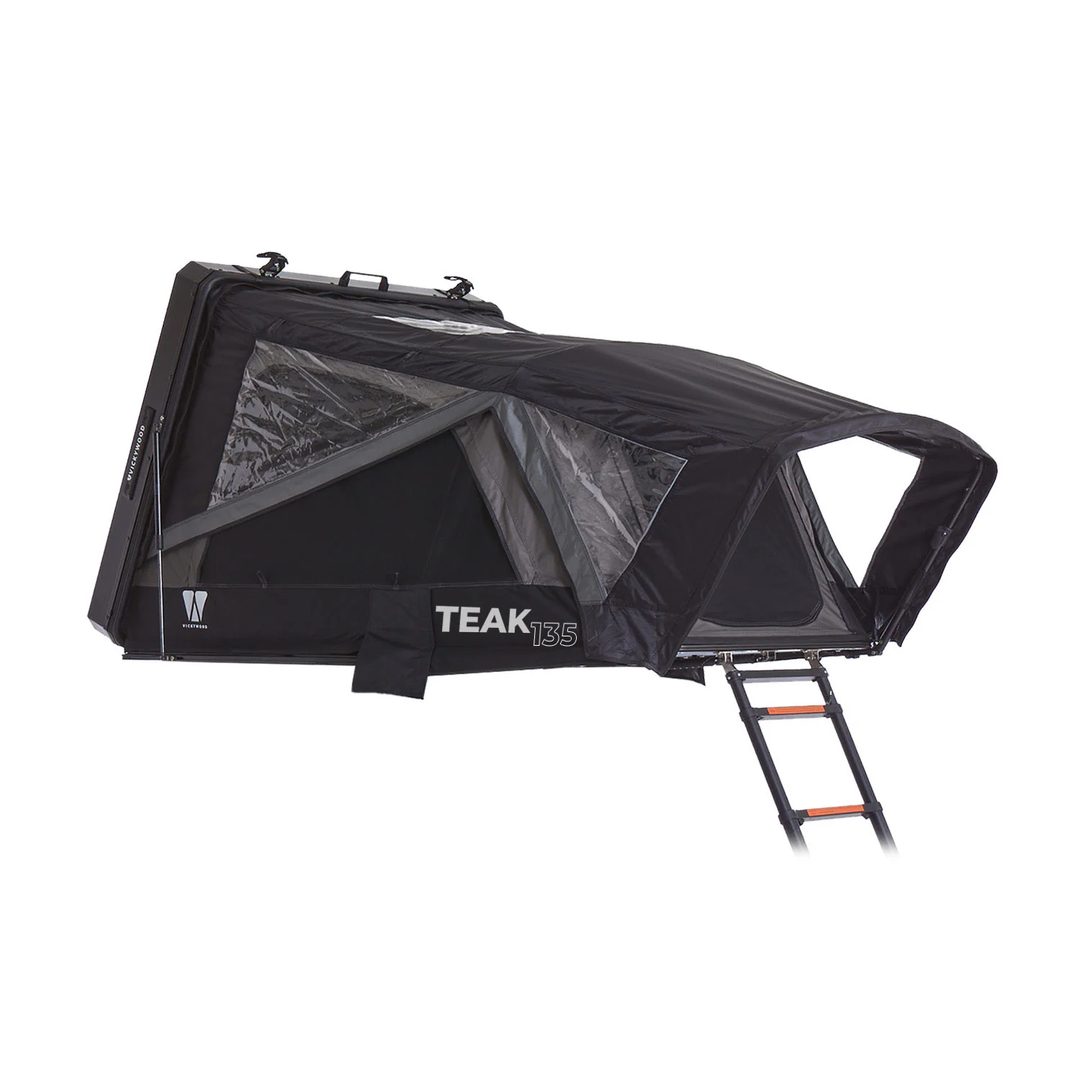
TEAK 1.0 135
The TEAK 1.0 135 is Vickywood's compact aluminium-shell hybrid, sleeping 2 on a 120 x 200 cm surface with a 120 cm interior peak. Its lid has overlapping windows that open both up and down, and it carries an integrated roof rack, a skylight and two USB-C LED strips. Packed height is a low 24.5 cm.
- Low packed height (24.5 cm)
- Integrated roof rack system
- Windows that open upward and downward
- Modest 3,000 mm water column rating
Vickywood
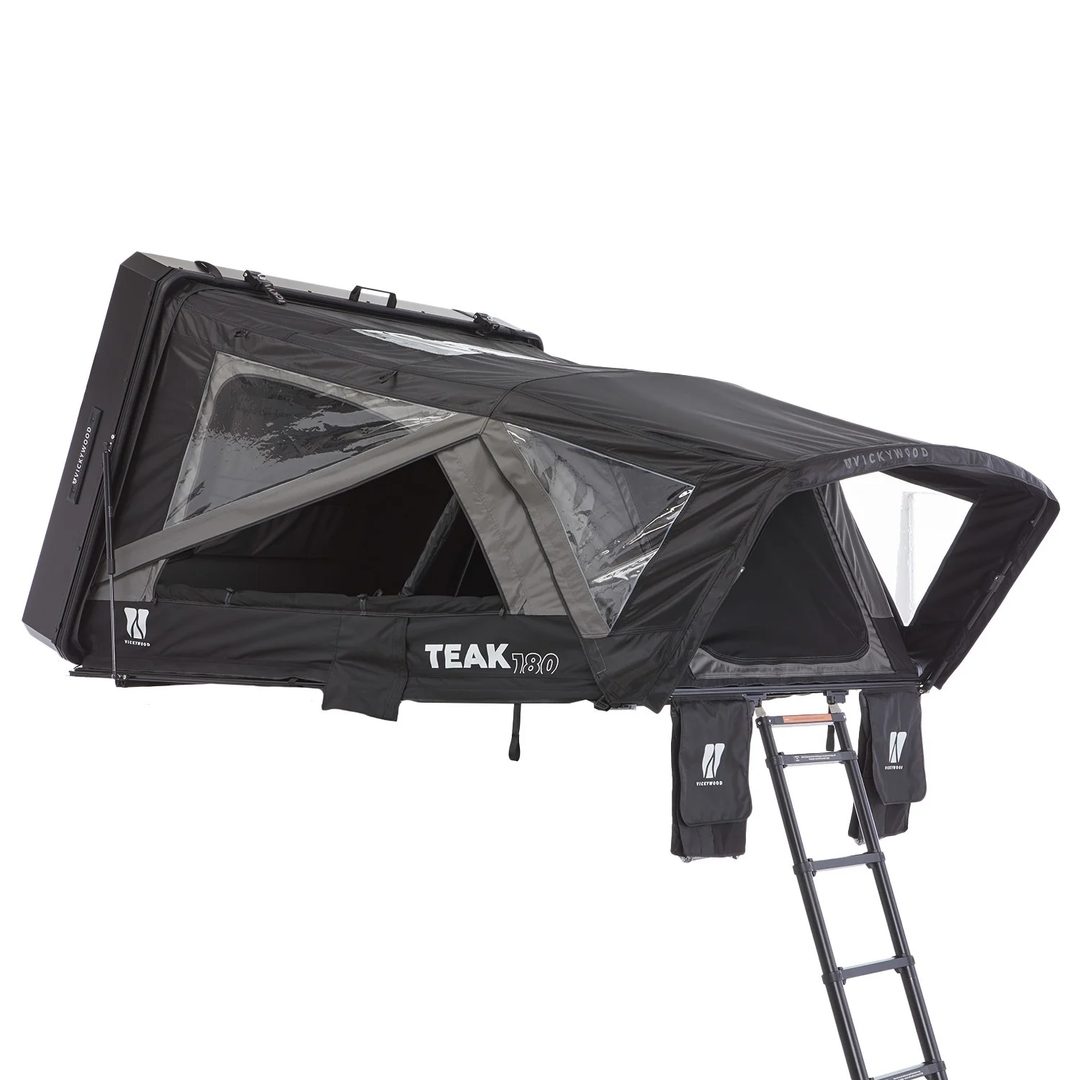
TEAK 2.0 180
The TEAK 2.0 180 is the wider of two TEAK 2.0 hybrid sizes, rated for up to 3 people on a 200 x 165 cm surface. It uses the same hinged aluminium honeycomb shell and integrated roof rack as the 160, with a roof window and LED lighting. Interior peak height is about 120 cm.
- Wider sleeping area than the TEAK 2.0 160
- Integrated roof rack system
- Thermal inner tent available
- Exact 180 price and rainfly fabric not published
Which one to pick
Take the TEAK 2.0 180 if you need the sleeping room more than you need the lighter tent. Take the TEAK 1.0 135 if your roof load limit is the binding constraint. Beyond that the feature rows below — heater port, skylight, annex, cargo rails — are where the remaining difference lies.
Every specification, side by side
| Specification | ||
|---|---|---|
| Overview | ||
| Type | Hybrid | Hybrid |
| Opening style | Clamshell | Clamshell |
| Sleeps | 2— worst of the tents compared | 3— best of the tents compared |
| Season rating | — | — |
| List price | $2,580— best of the tents compared | $2,910— worst of the tents compared |
| Weight and size | ||
| Weight | 139 lb— best of the tents compared | 179 lb— worst of the tents compared |
| Packed length | 4 ft 5 in— best of the tents compared | 6 ft 1 in— worst of the tents compared |
| Packed width | 4 ft 1 in— best of the tents compared | 4 ft 3 in— worst of the tents compared |
| Packed height | 9.6 in— best of the tents compared | 11.6 in— worst of the tents compared |
| Living space | ||
| Sleeping length | 6 ft 7 in | 6 ft 7 in |
| Sleeping width | 3 ft 11 in— worst of the tents compared | 5 ft 5 in— best of the tents compared |
| Floor area | 25.8 sq ft— worst of the tents compared | 35.5 sq ft— best of the tents compared |
| Interior height | 3 ft 11 in | 3 ft 11 in |
| Mattress thickness | — | — |
| Setup and build | ||
| Setup timeManufacturer's claim where published; otherwise estimated from tent type. Expect longer in practice. | ~3 minest. | ~3 minest. |
| Shell material | Aluminum | Aluminium honeycomb with rubberized surface |
| Fabric | 280 g/m2 ripstop polyester, 3,000 mm water column, UV 50+ | — |
| Warranty | — | — |
| Features | ||
| Integrated LED lighting | Yes | Yes |
| Heater / HVAC port | — | — |
| Roof skylight | Yes | Yes |
| Annex available | Yes | Yes |
| Solar ready | — | — |
| Carries cargo on top | Yes | Yes |
| Sources | ||
| Last verified | Vickywood product page | Vickywood product page |
Related comparisons
Or read the full spec sheets for the Vickywood TEAK 1.0 135 and the Vickywood TEAK 2.0 180.