23Zero Kabari Superfly vs RoofBunk Roamer
The 23Zero Kabari Superfly and the RoofBunk Roamer are both hardshell tents in the same part of the market, which makes them a genuine head-to-head rather than a comparison across categories. 23Zero and RoofBunk take noticeably different approaches to the same problem.
By the numbers, the 23Zero Kabari Superfly brings 48 kg, 2.38 m² of floor, 142 cm of headroom and sleeps 2. The RoofBunk Roamer counters with 60 kg, 2.94 m² of floor, 100 cm of headroom and sleeps 3.
The Kabari Superfly is 12 kg lighter at 48 kg against 60 kg, which on a factory roof rated for 68 to 75 kg is often the difference between a legal fit and a rack upgrade. Inside, the Roamer gives 2.94 m² of sleeping floor against 2.38 m², about 24 percent more, and it sleeps 3 to the Kabari Superfly's 2. Headroom separates them further: 142 cm in the Kabari Superfly against 100 cm, which is the difference between sitting up to dress and doing it lying down. Their list prices are within a few percent of each other, so price is unlikely to decide this one.
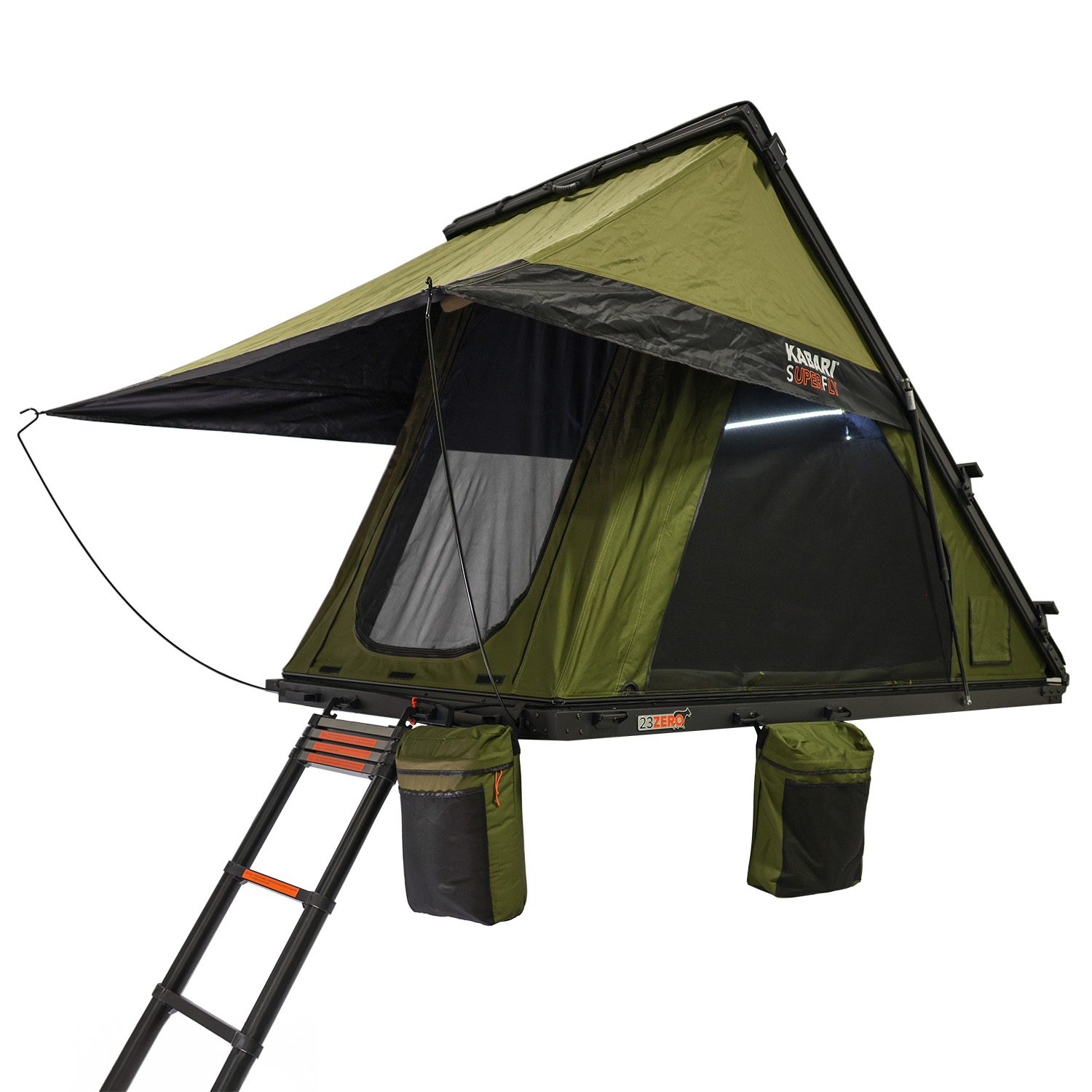
They open differently: the Kabari Superfly is a clamshell and the Roamer a pop-up. That is not cosmetic — it decides whether headroom is even across the tent or tapers towards one end, and how much of the roof the tent occupies when closed. The Kabari Superfly uses semi-hardshell: waterproof PVC top on an aluminium frame; the Roamer uses high-quality ABS. Canvas differs too: ECO13B fabric with Light Suppression Technology (LST) against 320gsm poly-cotton blend ripstop canvas. Closed, the Kabari Superfly sits 7 cm lower on the roof — 20 cm against 27 cm — which is drag you carry on every mile you are not camping.
23Zero
Kabari Superfly
The 23Zero Kabari Superfly is a lightweight wedge-style (clamshell) rooftop tent — a semi-hardshell with a waterproof PVC top on an aluminium frame that keeps a low profile and weighs just 105 lb. It sleeps two on a 2-inch foam mattress with a condensation mat, offers up to 56 inches of headroom, and includes dual heater/cooler ports and a USB LED light bar.
- Very light at 105 lb (48 kg) with a low 7.75-inch closed profile
- Up to 56 inches of headroom despite the wedge shape
- Dual heater/cooler ports and ECO13B fabric with Light Suppression Technology
- Semi-hardshell PVC top rather than a full aluminium shell
RoofBunk
Roamer
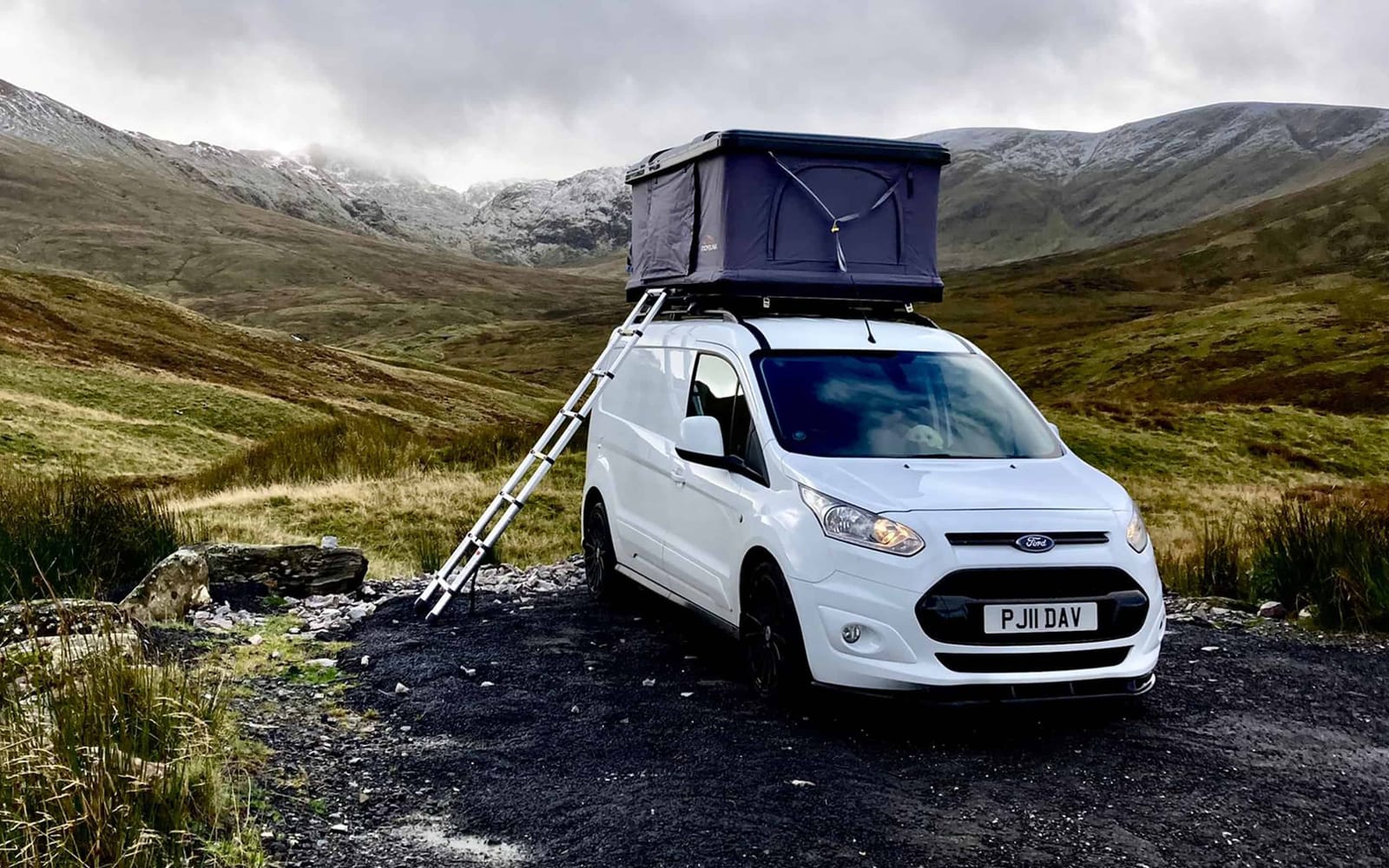
The Roamer is RoofBunk's ABS hard-shell tent, a gas-strut pop-up that the maker says opens in 30-60 seconds and sleeps 2-3. RoofBunk lists open dimensions of 210 x 140cm, a closed height of 27cm, a 7cm memory-foam mattress and a 60kg weight excluding the ladder. The high-quality ABS shell tops a 320gsm poly-cotton ripstop canvas body rated to 3000mm HH and 4-season.
- Quick 30-60 second gas-strut pop-up setup per the manufacturer
- Thicker 7cm memory-foam mattress than the soft-shell Explorer range
- Bedding can be left inside when the ABS shell is closed
- Weight (60kg) is published excluding the ladder
Which one to pick
Take the Kabari Superfly if your roof load limit is the binding constraint. Take the Roamer if you need the sleeping room more than you need the lighter tent. Beyond that the feature rows below — heater port, skylight, annex, cargo rails — are where the remaining difference lies.
Every specification, side by side
| Specification | ||
|---|---|---|
| Overview | ||
| Type | Hardshell | Hardshell |
| Opening style | Clamshell | Pop-up |
| Sleeps | 2— worst of the tents compared | 3— best of the tents compared |
| Season rating | 4-season | 4-season |
| List price | $2,495— worst of the tents compared | $2,320— best of the tents compared |
| Weight and size | ||
| Weight | 105 lb— best of the tents compared | 132 lb— worst of the tents compared |
| Packed length | 7 ft 3 in— worst of the tents compared | 6 ft 11 in— best of the tents compared |
| Packed width | 4 ft 2 in— best of the tents compared | 4 ft 7 in— worst of the tents compared |
| Packed height | 7.9 in— best of the tents compared | 10.6 in— worst of the tents compared |
| Living space | ||
| Sleeping length | 6 ft 8 in— worst of the tents compared | 6 ft 11 in— best of the tents compared |
| Sleeping width | 3 ft 10 in— worst of the tents compared | 4 ft 7 in— best of the tents compared |
| Floor area | 25.6 sq ft— worst of the tents compared | 31.6 sq ft— best of the tents compared |
| Interior height | 4 ft 8 in— best of the tents compared | 3 ft 3 in— worst of the tents compared |
| Mattress thickness | 2 in— worst of the tents compared | 2.8 in— best of the tents compared |
| Setup and build | ||
| Setup timeManufacturer's claim where published; otherwise estimated from tent type. Expect longer in practice. | ~60 secest. | 60 sec |
| Shell material | Semi-hardshell: waterproof PVC top on an aluminium frame | High-quality ABS |
| Fabric | ECO13B fabric with Light Suppression Technology (LST) | 320gsm poly-cotton blend ripstop canvas |
| Warranty | — | 2years |
| Features | ||
| Integrated LED lighting | Yes | — |
| Heater / HVAC port | Yes | — |
| Roof skylight | — | — |
| Annex available | — | — |
| Solar ready | — | — |
| Carries cargo on top | — | — |
| Sources | ||
| Last verified | 23Zero product page | RoofBunk product page |
Related comparisons
- Kabari SuperflyvsOrion 1200 Lightweight
- Kabari SuperflyvsAluminum Pop-up
- Kabari SuperflyvsBush Cruiser V2 Pro 120
- Kabari SuperflyvsOrthFrame
Or read the full spec sheets for the 23Zero Kabari Superfly and the RoofBunk Roamer.